

A commercial food waste composter can be a worthwhile investment when the waste disposal costs it removes exceed its running costs over time. For organisations in Thailand, the return depends on how much suitable food waste they generate, what they currently pay to dispose of it, and how effectively the machine fits into daily operations.
At HASS Thailand, we encourage businesses to start with those numbers. A practical assessment should cover the full cost of ownership, realistic savings, and a clear plan for using the material produced.
What does a commercial food waste composter cost?
The purchase price is only part of the investment. Before choosing a machine, assess both the upfront expense and the ongoing cost of operating it.
| Cost area | What to include |
| Equipment | Machine price and applicable taxes |
| Delivery and setup | Transport, positioning, electrical work and any site preparation |
| Electricity | Actual energy consumption under expected operating conditions |
| Staff time | Separating scraps, loading, cleaning and removing processed material |
| Maintenance | Servicing, replacement parts and any required consumables |
| Output handling | Storage, any further treatment required, and transport if used elsewhere |
Ask for a written quotation that identifies what is included. Confirm warranty coverage and the service arrangements available at your location; our service information provides a starting point.
Calculate electricity costs from actual energy use
A machine’s maximum power rating does not tell you how much electricity it uses throughout the day. Heating, mixing and other components may operate intermittently, so multiplying maximum wattage by 24 hours can overestimate typical consumption. Actual usage varies with the model, food waste volume, moisture content, and operating conditions.
For an initial estimate, ask the supplier for energy consumption figures based on a workload similar to yours:
Estimated monthly electricity cost = average kWh used per day × operating days per month × applicable electricity rate
For a more accurate assessment, have a qualified electrician install a dedicated electricity meter suitable for the machine. Record the meter reading at the beginning and end of a full month to measure its actual electricity consumption, including any standby usage.
Actual monthly consumption = closing meter reading − opening meter reading
Monthly electricity cost = actual monthly consumption in kWh × applicable electricity rate
For example, if the meter records 150 kWh over a month and the applicable rate is THB 4.50 per kWh, the calculated electricity cost is THB 675. These figures are illustrative, not a stated running cost for a HASS model. Use the tariff and applicable charges from your own electricity bill.
Record the amount of food waste processed during the same period. Comparing energy use with kilograms processed helps you assess running costs under your normal workload. Include these electricity costs, alongside maintenance and labour, when calculating potential savings and ROI.
Where can your organisation save money?
Waste collection and disposal
The most direct potential saving is a reduction in paid waste collection. This may come from fewer pickups, smaller bins, or lower weight-based disposal charges.
However, processing food scraps on-site will not automatically reduce your bill. If your organisation pays a fixed collection fee, you may need to renegotiate the service before any financial saving becomes available.
Ask your collection provider what your revised charges would be after diverting food waste. Use that difference in your ROI calculation, rather than assuming the entire collection bill disappears.
Waste handling and cleaning
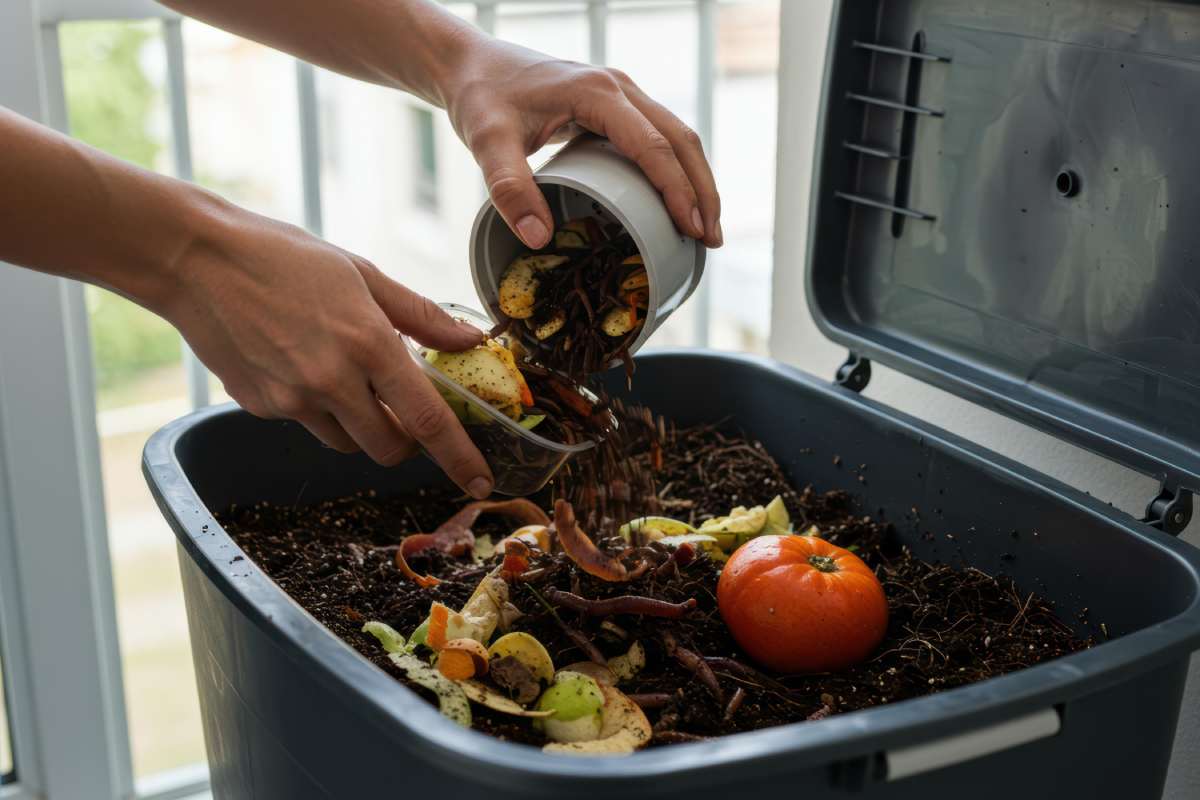
Separating food scraps for on-site processing may reduce the work involved in moving wet waste to storage areas and cleaning leaking bins. The composter also introduces tasks, including sorting, loading, and routine care.
Compare staff time before and after installation. Time released for other duties has operational value, but it becomes a cash saving only when paid hours, overtime or outsourced costs actually decrease.
Landscaping purchases
If your organisation maintains gardens or planted areas, the material produced may have a useful destination. Follow the machine’s instructions for any further treatment, mixing and application before use.
Only include savings where suitable output genuinely replaces something you currently purchase. Avoid assuming that every kilogram of food waste becomes a kilogram of usable compost, or that all output can replace purchased fertiliser.
How to calculate ROI and payback
Start by working out the annual saving after operating expenses:
Annual net savings = annual costs avoided − annual composter operating costs
Then calculate simple payback:
Payback period in years = total upfront investment ÷ annual net savings
Payback tells you how long it takes to recover the initial investment. To assess the return over a chosen period, use:
Simple ROI over the period (%) = [(cumulative net savings − upfront investment) ÷ upfront investment] × 100
Keep the period explicit. A five-year ROI is different from a one-year return.
Illustrative calculation
The following figures are hypothetical. They are not a HASS quotation, a customer case study, or a forecast of typical savings.
| Item | Illustrative amount |
| Total upfront investment | THB 180,000 |
| Annual collection and disposal costs avoided | THB 72,000 |
| Annual operating costs, including electricity, labour and maintenance | THB 24,000 |
| Annual net savings | THB 48,000 |
| Simple payback period | 3.75 years |
| Five-year cumulative net savings | THB 240,000 |
| Five-year simple ROI after recovering the investment | 33.3% |
This example assumes stable annual savings and operating costs, with no financing costs, tax effects, discounting, or residual value.
The outcome changes substantially if disposal savings are lower. If annual net savings fall to THB 24,000, payback increases to 7.5 years. If operating costs equal or exceed avoided costs, there is no financial payback under those assumptions.
Compare the calculated payback with the equipment’s expected service life and your organisation’s investment requirements.
Choose capacity around your actual food waste
Measure suitable food scraps over at least one representative working week, including busy days. For seasonal businesses, also assess peak periods and quieter months.
Record preparation scraps, uneaten food and unsuitable materials separately. This helps identify both what the machine can process and where purchasing or portion changes could prevent waste.
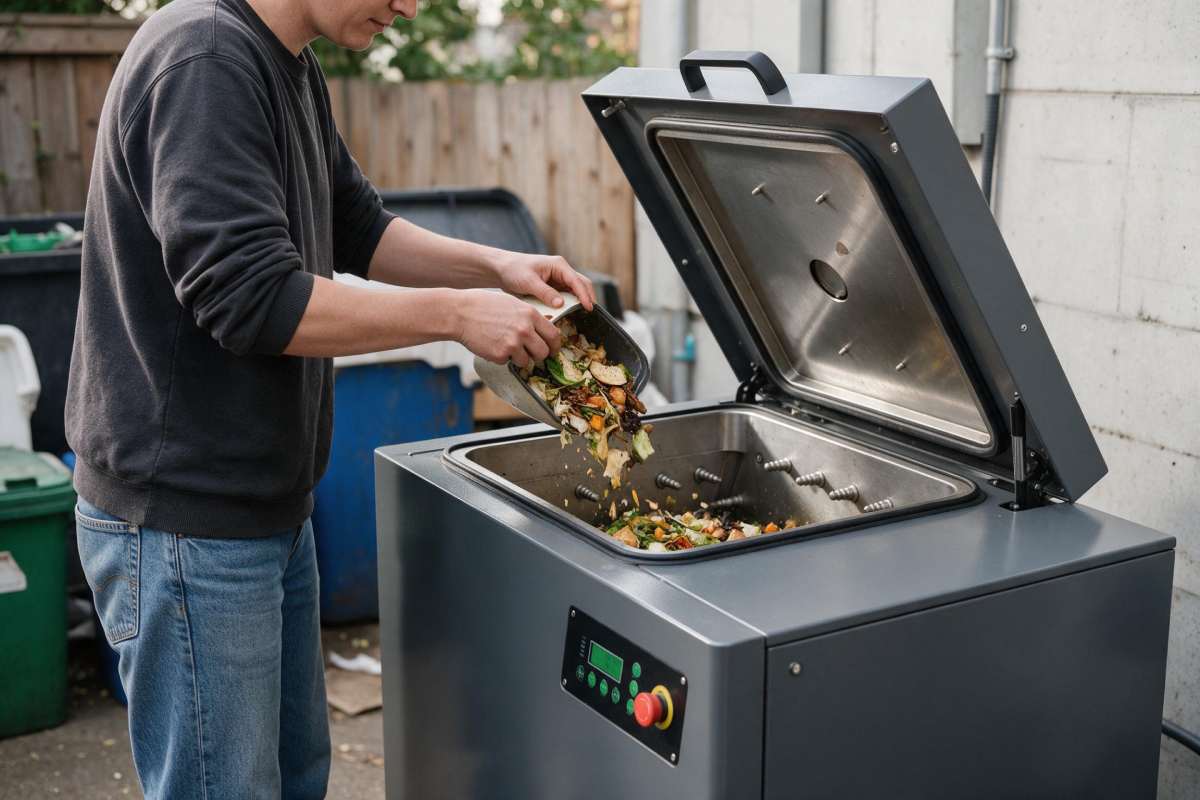
Our HASS HCC-100D commercial food waste composter uses microorganisms and has a listed processing capacity of 10 kg per day. Assess suitability against kilograms of accepted food waste, rather than customer or employee numbers alone.
At 10 kg per day across 300 operating days, the calculated throughput is 3,000 kg per year. That is a capacity-based illustration, not a guaranteed annual result; actual throughput depends on loading, accepted materials, operating conditions, and downtime.
If your kitchen regularly produces more than the rated capacity, plan how the excess will be handled. Include that remaining disposal cost in the assessment.
Larger operations: capacities up to 10 tonnes per day
Our commercial food waste composters range in capacity from 10 kg to 10 tonnes (10,000 kg) per day, providing options for restaurants, hotels, central kitchens and food production facilities.
Choosing the right capacity starts with measuring your daily food waste, including peak periods. For larger systems, calculate ROI using the selected model’s purchase price, installation requirements, electricity consumption and maintenance costs. The financial return depends on actual usage and the disposal costs your organisation can reduce.
Contact HASS Thailand to discuss the right model for your waste volumes, premises and budget.
When does the investment make sense?
The financial case is stronger when your organisation has consistent volumes of suitable food waste, collection charges that can genuinely decrease, and staff who can manage separation reliably.
Before purchasing, confirm:
- Daily and peak food waste volumes.
- Accepted materials and loading instructions.
- Installation space and operating requirements.
- Expected electricity use and maintenance costs.
- Revised collection charges after waste diversion.
- A practical destination for the processed material.
Also compare ownership with an available food waste collection service. On-site processing may suit your operation, but the most cost-effective arrangement depends on local service costs and your premises.
Keep waste prevention separate in the business case. Buying less excess food can reduce purchasing costs, while composting addresses the scraps that remain. Do not count purchasing savings as a return generated by the machine itself.
Assess the right solution for your organisation
A commercial food waste composter should fit your waste volumes, budget and daily workflow. The strongest business case uses actual disposal invoices, a complete equipment quotation and realistic operating expenses.
To explore whether the HCC-100D suits your premises or one of our larger capacity units, contact HASS Thailand with your average daily food waste volume, location and current disposal arrangements. We can discuss the product’s capacity and requirements so you can assess the investment for your organisation.