



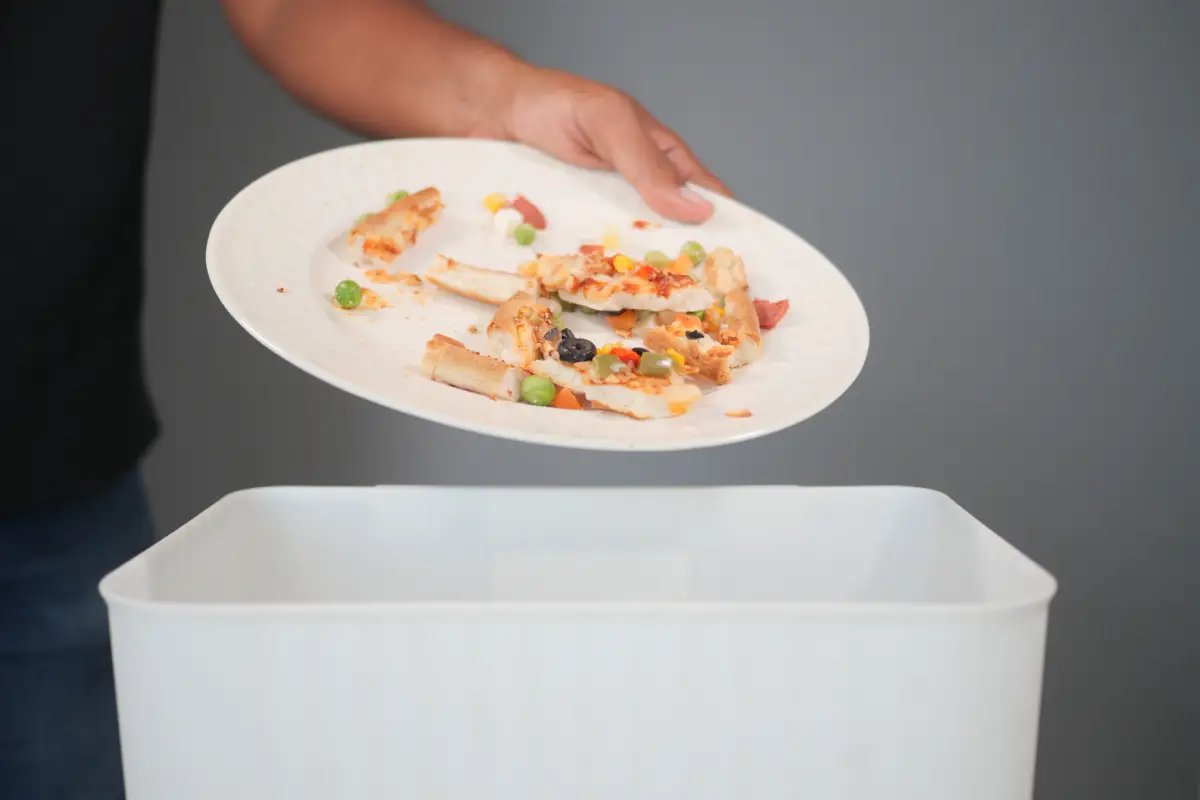

The right food waste composter should handle the amount of suitable food waste your business produces on its busiest regular days, with room for expected growth. Start by measuring that waste in kilograms per day, then check the machine’s loading requirements and available space.
A restaurant, hotel or staff canteen can generate very different amounts of waste, even when serving a similar number of people. At HASS Thailand, we recommend choosing capacity around what your kitchen actually discards.
This guide uses HASS product information for model capacities and public waste-management guidance for measurement and processing principles. The numerical examples are hypothetical; they explain the sizing method and are not customer results or independent product tests.
Measure your daily food waste first
Before comparing machines, keep a food waste record for two representative weeks. Include every service and operating day, particularly busy weekends, buffets and events. Seasonal businesses should also assess their high-season workload.

1. Define what will go into the machine
Decide which areas the proposed system will serve: the preparation kitchen, dishwashing area, buffet, staff canteen or several outlets. Count each batch of waste once. A container weighed in the kitchen should not be counted again when it reaches a central collection point.
Confirm the model’s accepted materials before finalising the audit. Keep two totals if needed: all food waste generated, and the portion suitable for the proposed machine. The difference still needs a disposal arrangement.
2. Weigh consistently throughout the day
The excess liquid from food waste should be drained off before weighing. Use a scale and a dedicated container. Weigh the empty container first, or use the scale’s tare function, so your record includes only the food waste. For example, a filled container weighing 12.4 kg with an empty weight of 1.4 kg contains 11 kg of scraps.
The EPA food waste logbook describes this weighing method and recommends recording the type of food and why it was discarded. Add the kitchen location and collection time so you can also assess the loading pattern.
Record:
- The weight of preparation scraps, such as vegetable trimmings.
- Uneaten food from plates, buffets, and serving counters.
- Food discarded because of spoilage or overproduction.
- The time the waste is collected and any unusual activity that day.
Keep packaging and other unsuitable materials separate. Record excluded food materials separately too, so the capacity calculation reflects what the selected machine can accept. Follow its preparation instructions, including draining excess liquid where required, and weigh consistently at the point of loading.
The US EPA’s food waste tracking resources offer a useful starting point for setting up a daily record.
Your audit can also reveal opportunities to reduce over-ordering or adjust portions. Account for realistic waste reductions when planning capacity, while allowing for the scraps your operation will continue to produce.
3. Check that the audit represents your operation
A quiet fortnight may understate the requirements of a hotel entering high season. Include occupancy, meals served or production shifts alongside the waste weights. Repeat the audit during a representative busy period where possible.
For a new business without operating records, use provisional estimates from a closely comparable kitchen, then validate them during a trial. Explain the assumptions to the supplier rather than treating a generic kilograms-per-customer figure as measured demand.
Allow for busy days and realistic growth
Calculate your average daily waste by dividing the total measured weight by the number of operating days recorded. Then identify the highest daily amount you expect regularly.

The following hypothetical seven-day extract shows how an average can hide regular peaks. In practice, collect a longer representative record before choosing equipment.
| Operating day | Suitable food waste |
| Monday | 28 kg |
| Tuesday | 30 kg |
| Wednesday | 31 kg |
| Thursday | 34 kg |
| Friday | 36 kg |
| Saturday | 45 kg |
| Sunday | 41 kg |
| Total | 245 kg |
| Daily average | 35 kg |
The calculation is 245 kg ÷ 7 operating days = 35 kg per day. Saturday’s 45 kg load is the more useful starting point if that level occurs regularly. A 30 kg/day machine would leave part of that regular workload unprocessed. A 50 kg/day model would be a starting point for discussion, subject to the food mix and loading schedule.
If a planned expansion is expected to increase that busy-day load by 20%, the calculation becomes:
45 kg × 1.20 = 54 kg per day
The business would then need to assess a larger model or a combination of machines. These figures illustrate the method; 20% is an example growth assumption, not a standard sizing allowance.
Spare capacity should reflect measured variability, planned growth and the operating limits of the selected model. There is no single percentage that fits every kitchen. Adding 20% to a quiet-day average could still leave a machine too small for normal weekend demand.
Occasional exceptional events need a separate plan. Compare the cost of additional capacity with an agreed collection arrangement for overflow. Include a backup disposal route for servicing or unexpected downtime.
Compare HASS commercial composter capacities
HASS offers several commercial capacities, allowing businesses to compare options against their measured daily food waste. The models below are shown in our product range information.
| Listed daily capacity | HASS model examples |
| 10 kg/day | HCC-100D |
| 25 kg/day | HCC-250D |
| 30 kg/day | HCC-030KC/X |
| 50 kg/day | HCC-050KC/X and HCCL-050K |
| 100 kg/day | HCC-100KC/X and HCCL-100K |
| 200 kg/day | HCC-200KC/X and HCCL-200K |
| 500 kg/day | HCCL-500K |
| 750 kg/day | HCCL-750K |
| 1 tonne/day or 1,000 kg/day | HCCL-01T |
These are rated capacities for comparison. Confirm the selected model’s accepted materials, loading limits, installation requirements, and current availability with HASS. Models with the same daily capacity can have different specifications.
The HASS HCC-100D product page lists a capacity of 10 kg per day. The examples below show how this and larger capacities can be assessed against an operation’s measured workload.
For larger projects, our commercial range extends to 10 tonnes per day. Discuss these systems directly with our team so the equipment can be assessed against your waste volumes and site requirements.
Understand what the capacity rating means
Before comparing prices, confirm whether a quoted figure means kilograms per day, per batch or per processing cycle. These describe different workloads. For a model rated per cycle, ask how long the full cycle takes, including loading, unloading, and any time before it can accept another batch.
Also establish whether the rating refers to food scraps before or after draining and whether any required additives are included in the stated load. Compare your audit with the same measurement basis used in the specification.
A reduction claim, such as a percentage reduction in waste weight or volume, describes a different performance measure. It does not increase the amount of incoming waste the machine is rated to accept. Ask whether the claim refers to weight or volume, and under which operating conditions it was measured.
Match the capacity to your daily workflow
A daily processing rating does not necessarily mean that the entire day’s waste can be added at once. Confirm the maximum amount per load, the interval between loads, and the operating time needed to achieve the stated daily capacity.
This matters for kitchens that generate most of their waste after a single service. A hotel breakfast buffet may produce a large load in a short period, while a factory canteen may spread its waste across several shifts.
For a site with several kitchens, compare a central machine with smaller units close to where waste is generated. Include the time and equipment needed to move scraps between areas. Two machines only provide useful combined capacity if staff can distribute the waste within each machine’s limits. If one machine is unavailable, the remaining unit must still stay within its own rating; installing two units does not automatically provide full backup capacity.
Examples for different business settings
The following scenarios are illustrations, not industry waste-generation benchmarks or installation case studies.
A café measuring 6 kg on ordinary days and 8 kg on busy days could assess the 10 kg/day HCC-100D, provided the actual food mix and loading routine meet its instructions. A household model should not be selected for commercial work solely because its daily capacity looks sufficient; confirm suitability and warranty terms for that use.
A restaurant with a regular peak of 45 kg could assess a 50 kg/day model. However, a forecast peak of 54 kg after expansion exceeds that rating. The listed 100 kg/day options or an appropriate combination of smaller machines deserve assessment, including the cost and practicality of distributing the loads.
A hotel producing 170 kg per day, with 120 kg collected immediately after breakfast, could assess a 200 kg/day system. Its daily total fits the headline rating, but the supplier must confirm whether it can accept that concentrated morning load and how any waiting waste should be managed.
Check the food mix and installation space
Describe the waste rather than just its weight
Tell the supplier what your waste contains. Rice, vegetable scraps, wet leftovers, and fibrous materials create different processing demands. Confirm how the selected model handles your typical mix, including any restrictions on bones, shells, oils or liquids.
HASS models with a processing capacity of 30 kg per day or more offer an optional bone-grinding unit. If your operation generates bones or hard shells, discuss these materials with HASS to confirm the appropriate model, grinding option and preparation requirements.
For HASS users preparing wet scraps, our guide to draining water from food scraps before composting explains the preparation process in more detail.
Do not assume that packaging labelled compostable is accepted by the selected machine. Keep bags, cutlery and other packaging out unless the manufacturer specifically permits them. Ask about preparation requirements for hard or fibrous materials instead of assuming that every organic item can be loaded directly.
Check access and operating requirements
Check the full operating area as well as the machine’s dimensions. Allow space for opening lids and doors, loading containers, removing processed material, cleaning and maintenance access. Confirm delivery access, floor loading, electrical supply and any ventilation, water or drainage requirements for the specific model.
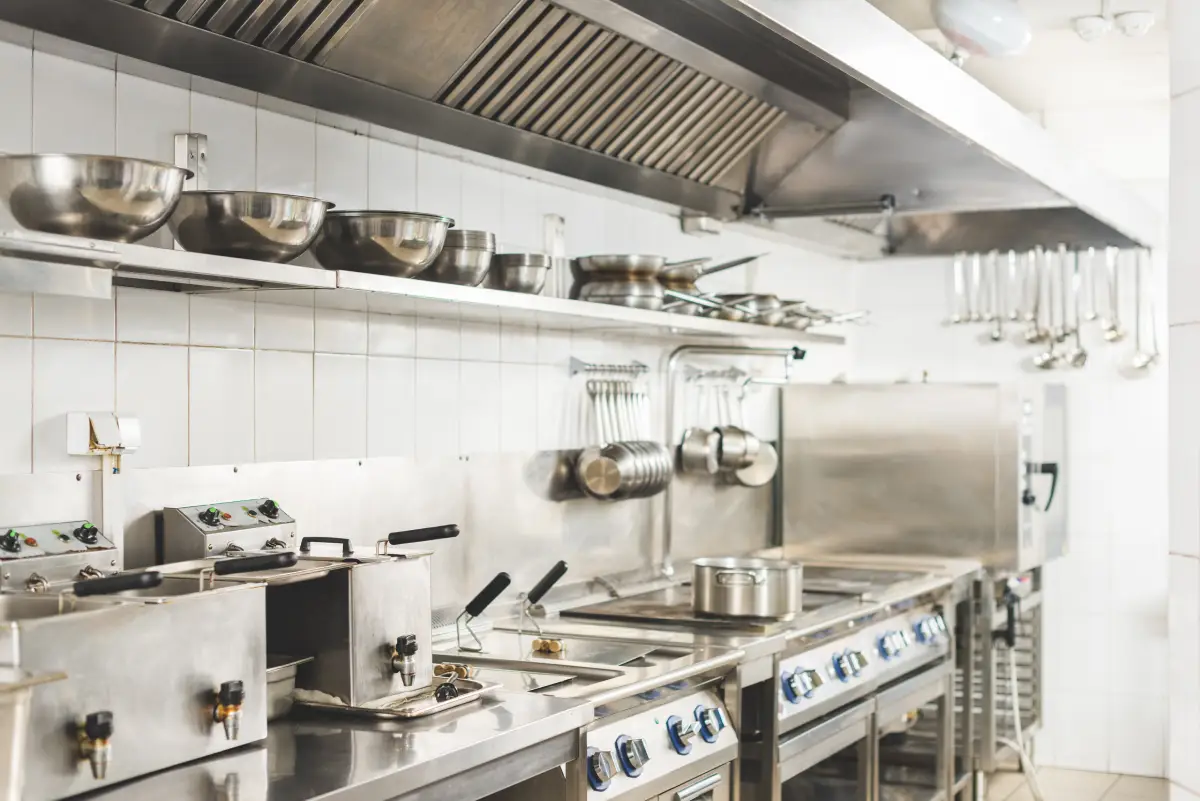
Include the route from the delivery vehicle to the installation position. Door openings, corners and lifts can limit access even when the final room has enough space. Ask the installer to confirm both the equipment weight and its loaded operating weight.
Plan for the processed material
Plan where the output will go. Processing time alone does not establish that material is ready for immediate use on plants. Follow the model’s instructions for removal, storage, further treatment and application. CalRecycle’s overview of commercial food waste technologies also explains why dehydrated food scraps and mature compost are different materials.

The US EPA defines compost as a biologically stable soil amendment produced through aerobic decomposition. Drying or rapidly reducing food scraps does not, by itself, demonstrate that the output has reached that condition.
Ask for model-specific instructions covering when to remove material, whether further curing or mixing is needed, and its intended use. Where landscaping use is proposed, request relevant test results and application guidance. A nutrient result alone does not answer every question about maturity, contaminants or suitability for a particular planting area.
Include containers, storage space and staff time for handling the output. Do not calculate storage requirements by assuming every kilogram of incoming scraps becomes a kilogram of finished material.
Consider the cost of the capacity you choose
A larger machine may provide useful room for growth, but it also needs to fit your budget and premises. Compare the purchase price, installation, expected electricity consumption, maintenance and staff time for each suitable option.
For electricity, request consumption in kilowatt-hours over a defined workload. Maximum power in watts describes an electrical rating; it does not establish typical daily consumption. Compare consumption measurements with the kilograms actually processed during the same period.
A larger machine may be reasonable where demand is growing, or frequent overflow would be expensive. Where waste volumes are low or irregular, compare a smaller system with an available food waste collection service. Use the collection charges your business can actually reduce, especially if the existing contract charges a fixed fee.
Include the cost of handling any waste that remains outside the machine’s capacity or accepted materials. Our guide to commercial food waste composter costs, savings and ROI explains how to assess the wider investment.
Questions to ask before ordering
Ask for a written proposal that answers these points for the exact model being offered:
- What daily and per-load limits apply to our measured food waste mix?
- What operating hours, preparation steps, and loading intervals are needed?
- Which materials are excluded, and are any additives or consumables required?
- What power supply, ventilation, clearances and other site provisions are needed?
- What energy-use evidence is available for a comparable workload?
- Who provides installation, staff training, maintenance and local service support?
- What must happen to the processed material before its intended use?
- How will commissioning confirm that the system meets the agreed workload?
If a demonstration or trial is available, agree on the measurements beforehand. A useful record identifies the food mix, weights loaded, loading times, operating hours, electricity used, output removed, and any interruptions. Avoid judging performance from a single favourable batch or appearance alone.
Confirm performance after installation
Keep the same waste log during commissioning and normal use. Record what the business generates, what the machine accepts, and what still leaves through other disposal routes. This makes it possible to check whether the system is handling the intended share of the waste.
If scraps build up, first review contamination, preparation, loading intervals, and the actual daily weight with the supplier. The cause may be the operating routine or a change in the waste mix, as well as insufficient capacity. Reassess sizing when menus, occupancy, production or opening hours change.
Frequently asked questions
1. Can I choose a composter based on customer numbers?
Customer numbers can help with an early estimate, but weigh the waste before purchasing. Menu choices, preparation methods, portion sizes, and the number of meals served all affect how much food a business discards.
2. Is a 10 kg per day composter enough for a restaurant?
It can suit a restaurant whose suitable food waste remains within that capacity and whose loading routine meets the model’s requirements. A small venue with extensive food preparation may need more capacity than a larger venue with little kitchen waste.
3. Does the tank volume tell me how much it can process?
Tank volume in litres describes space inside the machine. Daily capacity in kilograms describes its rated processing workload. Ask for both figures and use the confirmed daily processing capacity when comparing it with your waste audit.
4. Can I exceed the daily capacity during a busy period?
Do not assume the machine can absorb an extra load. Overloading may leave waste incompletely processed and affect subsequent loading. Follow the operating instructions and use your agreed overflow arrangement when necessary.
5. Can I divide weekly waste by seven to choose a machine?
Only if seven days accurately represents the collection and processing arrangement. A business generating 250 kg over five working days averages 50 kg per operating day, not about 36 kg. The daily peaks and loading limits still need assessment. Weekend catch-up should only be included where the supplier confirms the operating and storage arrangements.
6. Is the largest model always the safest choice?
Extra capacity can help with predictable growth, but it may require more space and investment. Choose a system that accommodates the expected workload and operating routine, with a planned response to exceptional peaks. Compare total costs and service support before deciding.
Find the right size for your business
Bring your average and busiest-day waste weights, a description of the food scraps, your loading schedule and details of the available space to the discussion. These give a much clearer basis for choosing a machine than a customer count alone.
Contact HASS Thailand to discuss a food waste composter suited to your business, from smaller commercial kitchens to larger operations handling tonnes of food waste each day.